
"coffee production growth"
10000 article(s) found

Basic knowledge of fine coffee basic knowledge of coffee growth
Coffee is a kind of drink, which gives the public the impression that it is black, bitter, sleepless and excited. The coffee beans we see in the coffee shop are tea-brown, which belongs to roasted coffee beans, while the color of the coffee liquid is amber. Coffee comes from coffee beans, which are harvested and processed from the fruit of trees. The growth habit of coffee: coffee

Vietnam's exports of coffee and pepper grew slowly in the first half of 2016
According to figures released by Vietnam's Ministry of Planning and Investment, Vietnam's national exports in the first six months of 2016 were 82.24 billion US dollars, an increase of only 5.9 percent over the same period last year, down from 9.2 percent in the same period last year and well below the target of 10 percent export growth for the whole year, according to a report by Vietnam's Investment News on July 8. Reported that Yue Planning and Investment Minister Nguyen Zhiyong reported to the government that the growth rate of exports was relatively low.

Basic knowledge of Fine Coffee growth knowledge of Coffee trees
Coffee is a kind of drink, which gives the public the impression that it is black, bitter, sleepless and excited. The coffee beans we see in the coffee shop are tea-brown, which belongs to roasted coffee beans, while the color of the coffee liquid is amber. Coffee comes from coffee beans, which are harvested and processed from the fruit of trees. The growth habit of coffee: coffee
Growth habits of Coffee
Coffee trees belong to the evergreen family of Akanaceae. They are tropical plants and are not cold-tolerant. Most of them are planted in areas with elevations of 300,400m, and also in highlands with elevations of 2000-2500 meters. But those who plant on slopes above 1500 meters above sea level have better quality. Coffee trees are most suitable for growing at an average temperature of about 20 degrees Celsius and an annual precipitation of 1500-2000 mm.

The growth of a coffee bean from fruit to raw coffee bean
A coffee tree can harvest 3-5 kg of fruit, and raw coffee beans account for 1. 5% of the fruit quality. Going from fruit to raw coffee beans is really a time-consuming and laborious task. Arabian, Robusta and Liberian Arabian coffee account for about 2% of the world's coffee production. The plant is not suitable for high temperature, low temperature, more rain and less rain. Coffee beans are oval and flat, with high quality

Production conditions of Coffee trees Shijiazhuang Cafe
Fertilization was carried out in combination with plastic surgery within 1-2 days after planting. The fertilization of young coffee trees is mainly nitrogen fertilizer, while appropriate application of phosphorus and potassium fertilizer, in order to accelerate the formation of crown and promote the development of roots. Human and animal manure and green leaf retting fertilizer also have a good effect on the growth of young coffee trees. Coffee seedlings can be fertilized for the first time two months after planting, and then once every 1-2 months. Such as human and animal dung

The method of planting coffee trees the origin of coffee trees is in Ethiopia, Africa.
The output and quality of coffee depend to a large extent on whether the planting of coffee trees is reasonable and whether the growth of coffee trees is luxuriant, so how to plant coffee trees and under what environment is suitable for growth? let's learn together today. The origin of the coffee tree is Ethiopia in Africa. Botanically, coffee trees belong to the subgenus Rubiaceae.

The growth habits of coffee the distribution of coffee the three main types of coffee
Coffee trees grow in national farms in tropical or subtropical regions known as coffee belts centered at the equator and between latitudes of 25 degrees south and north. At present, coffee is produced in more than 60 countries, widely distributed in South America, Central America, the West Indies, Asia, Africa, Arabia, the South Pacific and Oceania. In terms of output, Brazil, which accounts for the first place in the world, accounts for about 30%; the second
Emerging countries account for 20% of the world's coffee consumption.
According to Brazil's "World wide Web", emerging countries represented by China, Brazil, Russia, India and South Africa currently consume 20% of the world's coffee, which will reach 35% by 2020. According to analysis, the increase of the middle class in these countries is an important factor driving the growth of coffee consumption.
Coffee consumption in China is growing by more than 40% a year.
It is reported that in recent years, China's coffee consumption has risen sharply, with an annual growth rate of more than 40%. It has become an important engine of global coffee consumption and attracted the attention of the world. In 2003, China's total coffee consumption was 19080 tons, double that of 1995, with an annual growth rate of 14.9%. The annual per capita consumption was 14.7g, 0.18% of that of Europe, 0.35% of that of the United States and 0.4% of Japan.
The editor introduces the growth habits of coffee.
Coffee trees like mild temperatures during the day and less than two hours of direct sunshine, so if there is a lack of afternoon showers or fog to report every day, local farmers have to plant many taller trees in the coffee garden for shade. At night, they want an environment of about ten degrees Celsius but not too low, because too warm will make the coffee berries grow
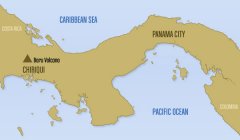
The growth advantage of Panamanian coffee beans the influence of the ecological environment of Pokuit Baru volcano on coffee beans
The Chiriki Heights where the Panamanian farm is located consists of two main areas: Boquete and Volcn-Candela. The picturesque town of Bockett has been in the tourist spotlight for the past decade because of its spring weather, cost of living and many activities in the area. However, the real essence of Boquete lies in the century-old tradition of coffee production: in fact, B.
Arabica coffee can't adapt to climate change. Production is plummeting? Carbon dioxide may be the savior.
For more information on coffee beans, please follow the coffee workshop (Wechat official account cafe_style) at the end of last year, the United Nations Climate change Panel (IPCC) released a major research report on global warming of 1.5C, which solemnly warned that if countries do not reduce carbon dioxide emissions as soon as possible, global warming will exceed 1.5C between 2030 and 2053 [1]. However, President Sichuan of the United States
Special "requirements" for the growth environment of small-grain coffee
Small seed coffee is native to the lower part of the Ethiopian rainforest in northern Africa. The temperature is relatively low, with an average annual temperature of 20 degrees. The origin of medium-grain coffee is near the equator. Therefore, small seed coffee has stronger cold tolerance and wider adaptability than medium grain coffee. Medium-grain coffee requires a slightly higher temperature.

Yum China 2018 results: KFC Coffee and desserts help CoffiiJoy layout multiple stores
Professional coffee knowledge exchange more coffee bean information please follow the coffee workshop (Wechat official account cafe_style) news on February 6, China's largest catering operation company Yum China announced its fourth quarter and full-year results of 2018, excluding foreign currency translation differences, Yum China's fourth-quarter revenue was 1.91 billion US dollars, up 7% year-on-year, and system sales increased 6% year-on-year. Operating profit

Knowledge of boutique coffee-the growth process of coffee
Looking at this pure black liquid, it took a year of growth, harvesting, production, baking, grinding, extraction, and finally condensed into that mellow taste. Like all the things that have been polished by time and hands, such as red wine, such as jade, there is an infinite world lurking in a small space. Coffee beans would rather be as old as thousands of years ago.
Cultural History of Fine Coffee an introduction to the History of Coffee in Vietnam
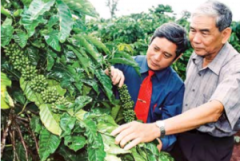
Vietnam has several professional coffee kings whose outstanding contributions have enabled Vietnam to grow into the world's second largest coffee producer outside Brazil in recent years. Several other coffee figures who have contributed silently are DoanTrieuNhan, who has been focusing on the growth of national coffee production since the end of the Vietnam War, which can be said to be the main planner of Vietnam's coffee growth plan. DoanTrieuNha

Starbucks is getting farther and farther away from professional coffee under the performance bottleneck of fecal bacteria.
Professional baristas follow cafe_style, the official Wechat account, after six consecutive quarters of sales that fell short of Wall Street expectations, Starbucks announced that it is starting to rescue results by focusing on its food business. According to CNBC, at the commemoration of the 25th anniversary of the listing of Starbucks NASDAQ, Starbucks Chief Financial Officer Scott Maw said that it was the top priority.

Balanced acidity Ecuadorian coffee flavor Taste Manor Features Galapagos coffee production
Economic development can be divided into three periods, namely, the availability period, the banana period and the oil period. Ecuador is known as the land of bananas. In January 2000, Ecuador formally implemented the economic dollarization policy. In 2004, the Ecuadorian government reached agreements on foreign debt restructuring and loans with the International Monetary Fund and other international financial institutions, and the economy maintained a sustained growth momentum. In 2006, Palacio's government focused on increasing

Vietnamese Coffee Southeast Asian Coffee Flavor Vietnamese farming Vietnamese Coffee Brand
The growth environment of boutique coffee beans also has higher requirements. Generally grow at an altitude of 1500 meters or even more than 2000 meters above sea level, with appropriate precipitation, sunshine, temperature and soil conditions. Some world-famous coffee beans also have a special geographical environment, such as the alpine clouds in the Blue Mountains, the free shade provided by the afternoon clouds in Kona, and the volcanic ash soil in Antigua.